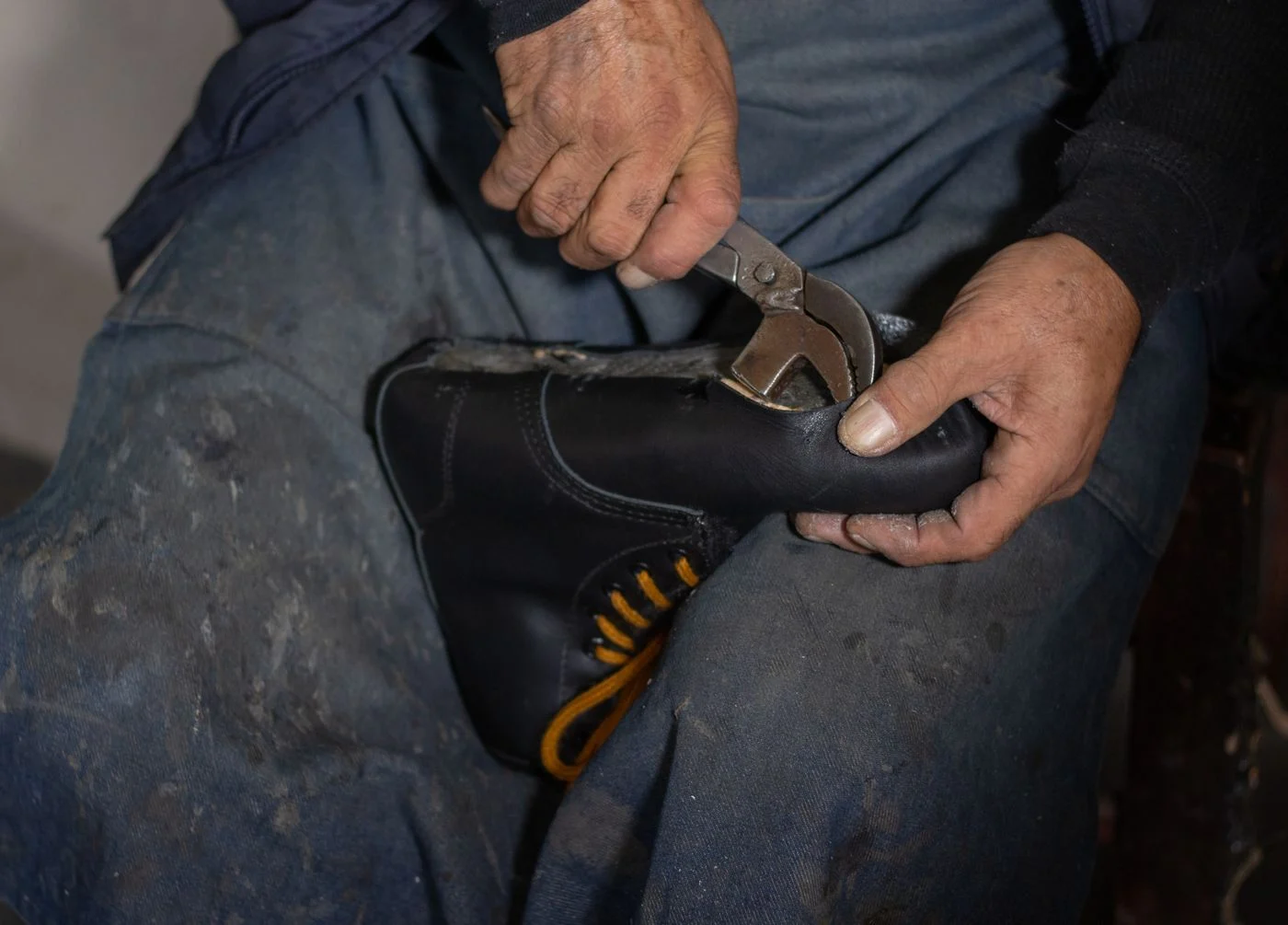
If the upper is sound, resoling is almost always worthwhile, especially on quality leather shoes and boots.
USUALLY YES
Heel Caps and Stacked Heels
Heel tips wear first. Replacing them is simple and extends a shoe’s life significantly.
USUALLY YES
Open Seams and Broken Stitching
A seam that opens at the welt or upper is repairable if caught before the leather itself tears.
USUALLY YES
Scuffs and Dry Cracks
Surface scuffs and early dryness respond well to conditioning and color work. Deeper cracks take more skill but are often fixable.
USUALLY YES
Delaminating Sneaker Soles
Sole separation at the toe or heel is a common failure in glued sneakers and a straightforward repair.
USUALLY YES
Broken Hardware
Buckles, zippers, snaps, and D-rings can usually be replaced with close-matching hardware.
DEPENDS ON THE SHOE
When We Assess Before Committing
These are the cases where we quote after inspection, not before, because an honest answer matters more than a fast one.
ASSESS FIRST
Severe Leather Rot
Leather dried past flexibility, or a lining fully separated from the shell, may not hold a repair. We will tell you honestly.
ASSESS FIRST
Structural Upper Damage
A fully collapsed toe box or counter can sometimes be rebuilt. If the upper is cracked through, it depends on the material.
ASSESS FIRST
Very Cheap Construction
Some low-cost footwear uses glues and materials that do not support repair. The cost may not be worthwhile.
ASSESS FIRST
Midsole Foam Breakdown
Compacted EVA foam in running shoes is not repairable. Only the outsole can be replaced.
WORTH IT
Good Leather Earns a Second Life
A well-made shoe is built to be resoled and reconditioned more than once. Repair is usually a fraction of replacement, and the shoe is already broken in.